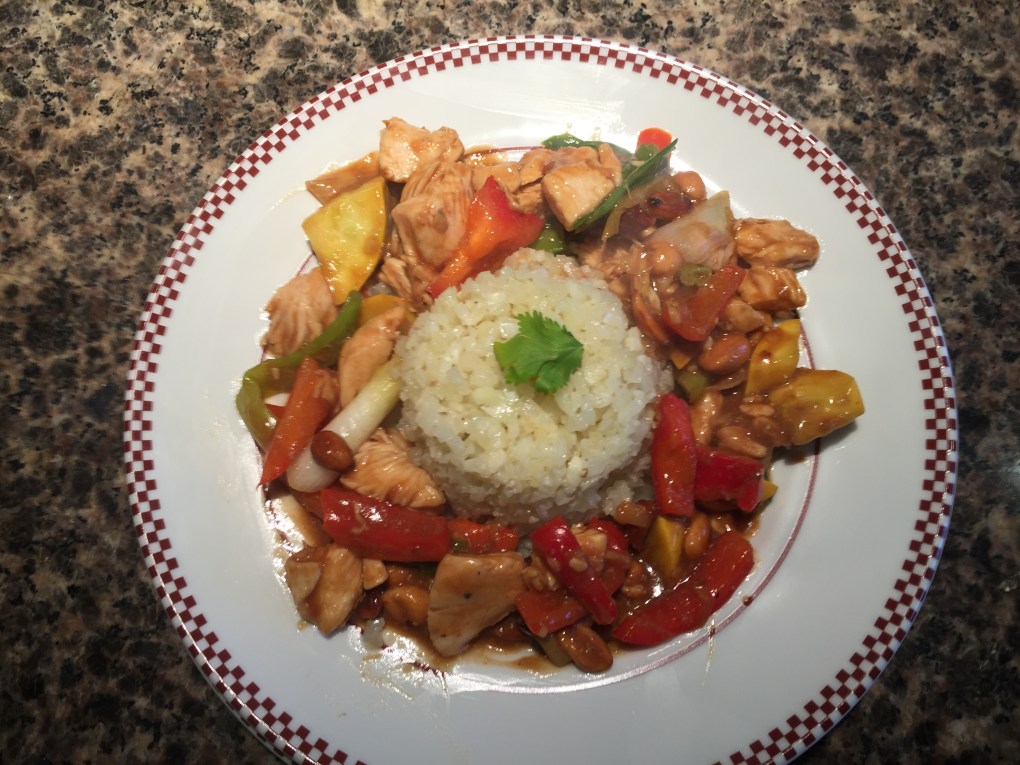
Recipe – Kung Pao Chicken

IMG_2585Kung Pao chicken is the first dish that fired my passion for food.  Everyone who loves food has early memories of the precious few times that tasting a new dish changed everything they thought about what food – and the pleasure we get from food – could be.  And part of cooking foods from our past is an attempt to re-experience the magic of tasting these foods for the first time.  Smell and taste are closely tied to memory, which is why the best cook we ever meet is the person (usually, mom) who cooked for us when we were small and just learning what we like and what we don’t.

I grew up in Kansas City, Missouri, a town famous for barbecue… and not much else food-wise at the time.  Going out to eat meant simple American fare.  Pondarosa Steakhouse was a favorite, mostly because it had a large salad bar.  Red Lobster was for special occasions.  And Chinese food was the standard Cantonese-American cuisine of the time – beef with broccoli, chop suey, etc.  Crab Rangoon was the popular appetizer (to be honest: I still love Crab Rangoon).  And I was a picky eater as a kid – didn’t like vegetables, didn’t like stews, didn’t like much of anything that didn’t come from a can or a box.  Lunch for me was Uh Oh SpaghettiOs with Sliced Franks, RavioliOs, and mac and cheese (Kraft, of course).

Then, as my parents started building a modest real estate business in the northeast part of the city, they found a Chinese restaurant called North East China Restaurant.  Despite the name, the restaurant specialized in cuisine from the south of China – Szechuan and Hunan.

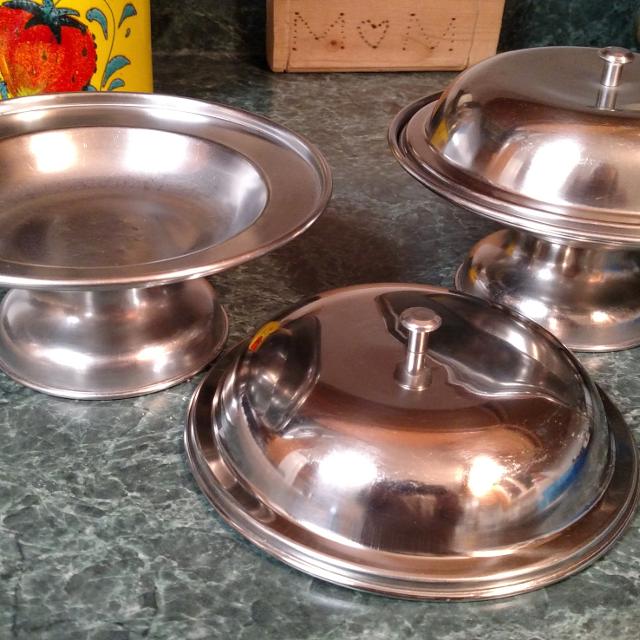
Remember these?
5c71f5013feccd5f5bba06fade08268e

Back in the 80’s, it seemed like every Chinese restaurant served food in these.  So we go North East China Restaurant, we order pot stickers and kung pao chicken, and they are served in these tins that reveal everything you need to know with a puff of delicious steam when the lid is raised.

Little kid mind blown.  Flavors I’d never smelled or tasted before – ginger, charred peanuts, salty and sour with fiery dark red chilis.  Not many vegetables that I remember, but that was fine with me!

Nowadays, Kung Pao Chicken in restaurants is often a disappointment.  The flavors are muted, the chicken is rubbery, and cheap vegetables fill it out.  Panda Express is typical of what you get these days – basically chicken in tasteless brown sauce with a few raw peanuts stirred in.

But Kung Pao can be a transcendent dish, so let’s get cooking and make it right!  There are a couple of hard to find ingredients here, but there are good, easy to find substitutes.  And this recipe doesn’t use the traditional Szechuan peppercorns, which were illegal to import into the U.S. until 2005 (and still aren’t easy to find).  If you have these, I’d recommend trying the recipe “as is” below – the peppercorns drastically change the flavor of the dish, and frankly I prefer the recipe without them.  But if you decide to use them, throw them in at the end with the peanuts and chilis.
IMG_2529

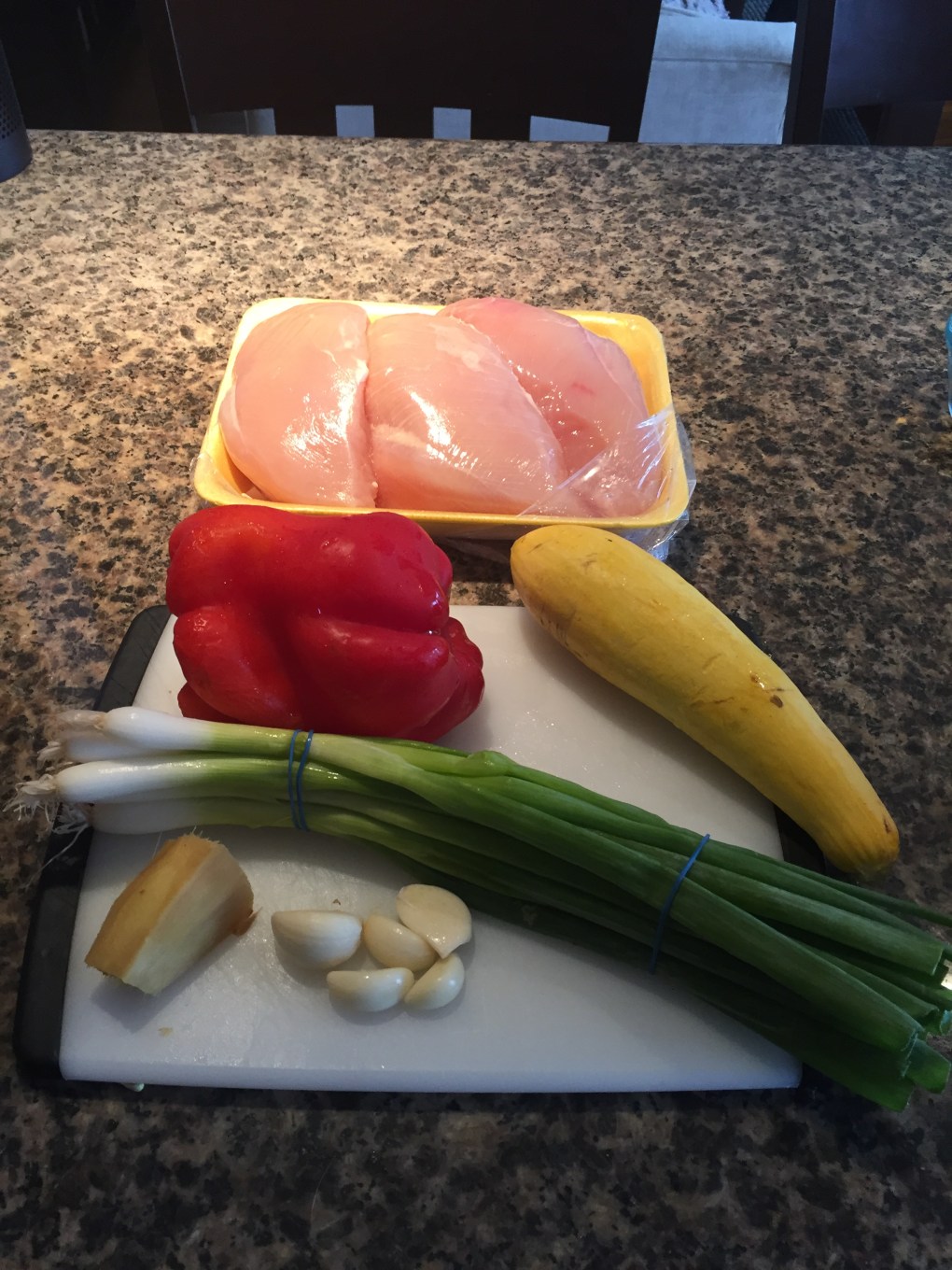
Ingredients:

  • 1 ½ pounds chicken breast
  • ½ cup peanuts
  • 6-8 dried red chilis
  • 1 inch cube of fresh ginger, minced
  • 3-4 cloves garlic, minced
  • 2 tablespoons oil (neutral flavored – canola, vegetable, grapeseed)
  • 3-4 green onions, sliced into one inch pieces
  • 1 cup of vegetables of your choice, diced – good options include zucchini, red peppers, broccoli)

Marinade ingredients:

  • 1 tablespoon Shaoxing cooking wine (or dry sherry)
  • ½ teaspoon salt
  • ½ teaspoon black pepper
  • ½ teaspoon white pepper
  • 2 teaspoons corn starch
  • 1 tablespoon oil (neutral flavored – canola, vegetable, grapeseed)

Cooking sauce ingredients:

  • 3 tablespoons light soy sauce (reduced sodium is good here)
  • 1 tablespoon dark soy sauce
  • 2 tablespoons black vinegar (or a cheap balsamic vinegar, rice vinegar, or even 1 ½ tablespoons white distilled vinegar)
  • 2 tablespoons Shaoxing cooking wine (or dry sherry)
  • 1 tablespoon sugar or sugar substitute
  • 1 tablespoon cornstarch
  • 1 tablespoon Sri Racha or other chili paste (optional, to taste)
  • 3 tablespoons water or chicken stock

Steps:

  1. Dice the chicken and combine with the marinade. Let marinate about 15 minutes.
  2. Dice your vegetables, mince your garlic and ginger, and make the cooking sauce. I like to use a shaker for the sauce.
  3. Heat a hot over medium-high heat and add a tablespoon oil. Add the peanuts and the chilis and stir fry until the peanuts and chilis are lightly charred (see photo below).  Remove from the wok into a bowl and set aside.
  4. Stir fry your vegetables (not including the onion) until partially cooked but still crisp (usually 1-2 minutes, or 3-4 minutes for starchy vegetables like carrots or bigger pieces like broccoli). Remove from the wok into a bowl and set aside.
  5. Add the other tablespoon of oil and increase heat to high. Add the garlic and ginger and stir fry for 30 seconds.
  6. Add the chicken and stir fry for about 3 minutes, JUST until all the pink is gone.
  7. Add the green onions, stir fry for 1-2 minutes.
  8. Add your vegetables, stir fry for 1 minutes.
  9. Add the charred peanuts and chilis, stir fry for 1 minute.
  10. Stir (or shake!) your cooking sauce so the cornstarch dissolves. Add to the wok and stir fry for 1-2 minutes.  Season to taste – don’t be afraid to add more vinegar or sugar.  It should be quite sour with enough sweetness, salt and heat to add balance.
  11. Serve over rice or rice replacement.

OK, a few tips!

Mincing ginger – even more fun than mincing garlic!  Peel your ginger root, then slice thinly across the grain (very important, ginger can be very fibrous).  Then take each quarter-sized slice and SMASH with the side of your chef’s knife.  It should look like this:

Once you’ve smashed the ginger, mince it with your knife a little to be sure all the pieces are tiny.

Get a little salad shaker for mixing the sauce – Oxo makes a good one.  (Oxo makes a lot of good stuff; their smooth edge can opener is a life changer.)  You’ll find it super useful for salad dressings.  I also sometimes use old jelly jars – the ones by Bonne Maman are particularly easy to use and clean.

The peanuts and chilis are done when they are lightly charred – mine looked like this:

IMG_2556

I used yellow squash and red peppers.  Here is what they looked like when they were done when stir frying them.

The hard part with stir fries is making sure the veggies are all cooked but not too soft – you want the veggies to have some crispness and bite.  Vegetables all cook at different times, usually varying by size and starchiness, which is why I recommend stir frying each one separately and tasting to make sure it’s ready.  Sometimes the veggies benefit from a little steaming in addition to stir frying – broccoli typically falls in this category.  To steam, just add ¼ cup water to your hot wok.

Do not be afraid of high heat here – woks need to be super hot to work right.  Just keep stir frying constantly so things don’t burn.

A couple notes on the ingredients:

Shaoxing cooking wine can be found in most Asian markets.  Dry sherry is a fine substitute – both are inexpensive and versatile in Chinese and Taiwanese cooking.  Sherry obviously has more uses – including drinking it straight!  You can even use a sweet or cream sherry in this dish – just go lighter on the sugar or omit it altogether.

Black vinegar is a little harder to find, but well worth it.  The best I can describe it is “Chinese balsamic” – it has similar rich, slightly sweet notes.  I used Kong Yen brand from Taiwan – it’s very good, almost like a steak sauce, and I use it for dipping pot stickers.  But here you can use rice vinegar or even plain white vinegar.

I do recommend getting a bottle of DARK soy sauce.  What we commonly use is technically “light” soy sauce.  Dark soy adds sweetness and a compelling dark color to whatever you make.  Lee Kum Kee is usually easy to find; Pearl River Bridge is a little cheaper – be sure to look for the word “DARK”:

That’s it for now!  Next week, we review another restaurant.

Happy eating!


Recipe – Shrimp Creole

Hello Friends!

Let’s get cooking!  First up, a Louisiana classic – Shrimp Creole.

This recipe is inspired by the late, great Paul Prudhomme and adapted from his classic cookbook, Chef Paul Prudhomme’s Louisiana Kitchen.  This cookbook harkens from a simpler, more innocent time when a recipe could call for a stick of butter and half a cup of lard without nary a concern for the HDL cholesterol levels of the reader and his or her family.  While butter always makes things richer, sometimes a little goes a long way, and here I think just a tablespoon is just fine.  The flavor comes from browned vegetables, shrimp stock and of course lots of Cajun/Creole herb and spices!

The best tip I can give you is to taste the sauce before you add the shrimp to be sure it is to your liking.  Adjust with salt, sugar, pepper – even an extra dash of Tabasco if you like.  This is not a subtle dish – I like it super spicy, but this is (for me) medium spicy.

Here are the ingredients:

  • 1 ½ pounds of shrimp tails – raw AND shell on – preferably deveined
  • 1 large onion or 2 medium onions, finely diced
  • 4 ribs celery, finely diced
  • 1 green bell pepper, finely diced
  • 2 cloves garlic, minced
  • 2 teaspoons salt
  • 1 teaspoon cayenne pepper
  • 1 ½ teaspoons white pepper
  • ½ teaspoon ground black pepper
  • 1 bay leaf
  • 1 tablespoon butter
  • 1 teaspoon hot sauce (Tabasco, etc.) – optional
  • 1 tablespoon dried THYME
  • ½ tablespoon dried basil
  • 1 28-oz can crushed tomatoes
  • 1 tablespoon tomato paste
  • 1-2 teaspoons sugar (to taste)

The nice thing about this recipe is that you probably have most of the ingredients handy.  Nothing exotic here.

Equipment: large, deep skillet or a Dutch oven, and a medium stock pot or large sauce pan

Steps:

  1. Peel and devein your shrimp. Keep the shells and rinse them well. Put the shells in your stock pot or sauce pan with trimmings from the celery and onion (not the green pepper), one clove garlic and 1 teaspoon salt.  Add a quart of water and bring to boil on high heat.  Then let simmer on low while you cook the rest.  This is your SHRIMP STOCK.  Let it reduce by about half – do not dilute it unless it gets dry – the goal is about two cups of concentrated, shrimpy goodness (Note: this is even better with head-on shrimp)
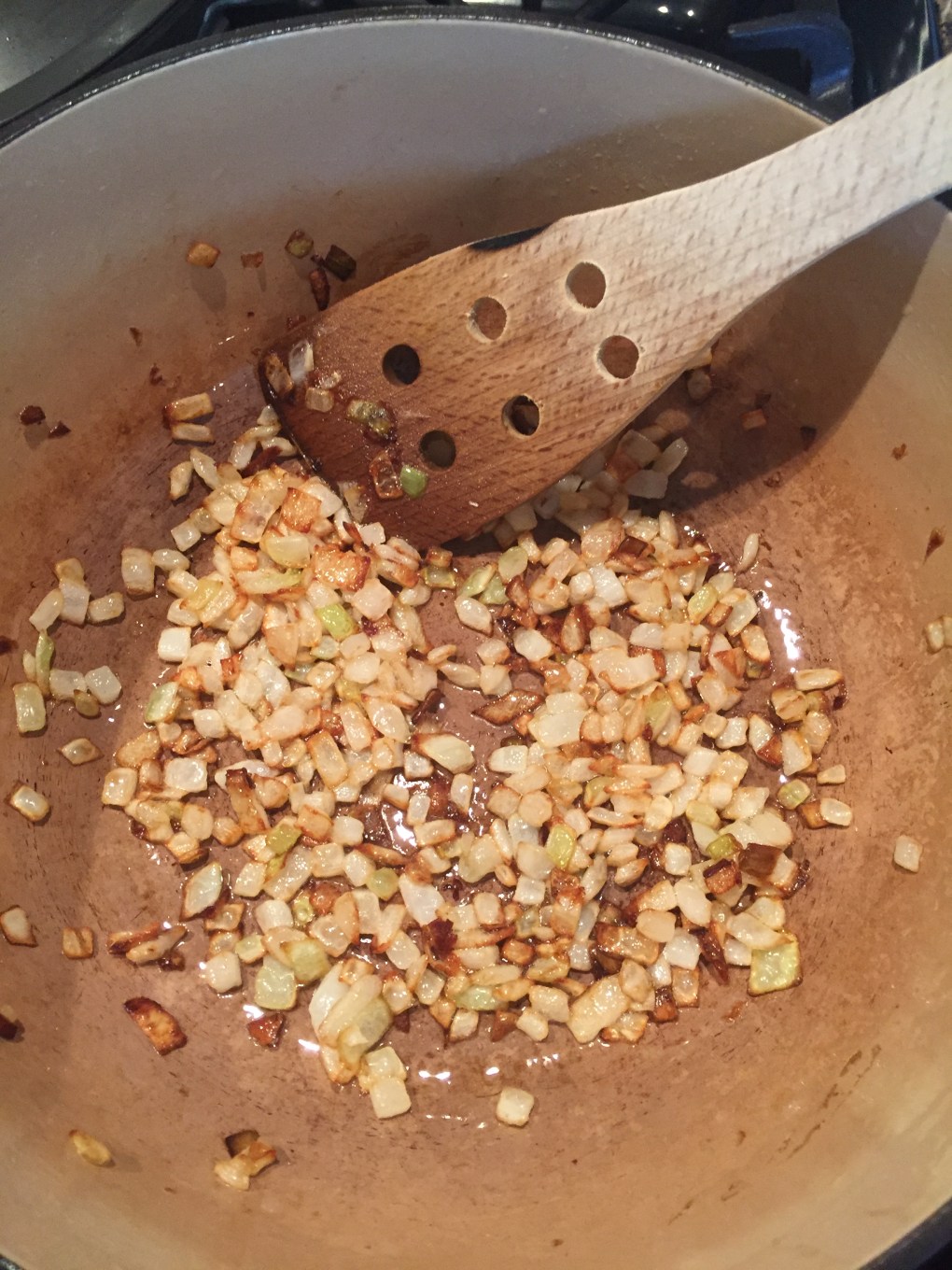
  2. Heat 1-2 tablespoons of oil in your Dutch oven on medium-high heat. When hot, add half the diced onions and cook, stirring frequently (but not continuously) until browned – usually 5-7 minutes. (See photo below)
  3. Add remaining onions, celery and green peppers sauté until tender, usually about 5 minutes.
  4. Add the garlic.   Add salt, cayenne, white pepper, black pepper and bay leaf.  Add the butter too.  Sauté that for 1-2 minutes.
  5. Add the hot sauce (if using) and the thyme and basil. Stir constantly for 1-2 minutes so it doesn’t burn.
  6. Add a ladle or two of the SHRIMP STOCK that you’ve been making and stir. Be sure to SCRAPE the bottom to loosen the browned bits on the bottom.  Cook for 1-2 minutes.
  7. Now add the tomatoes and sugar and stir well. Reduce the heat to medium-low once the tomatoes are bubbling.  Add tomato paste and stir.  Cook uncovered for at least 15 minutes.
  8. Add two cups of your nice, rich SHRIMP STOCK. Cook for 10 minutes more – and it’s more than fine to keep cooking on low heat for longer if you need to.  The goal is to concentrate the flavor.  TASTE and ADJUST for seasonings (salt, pepper, sugar, butter)
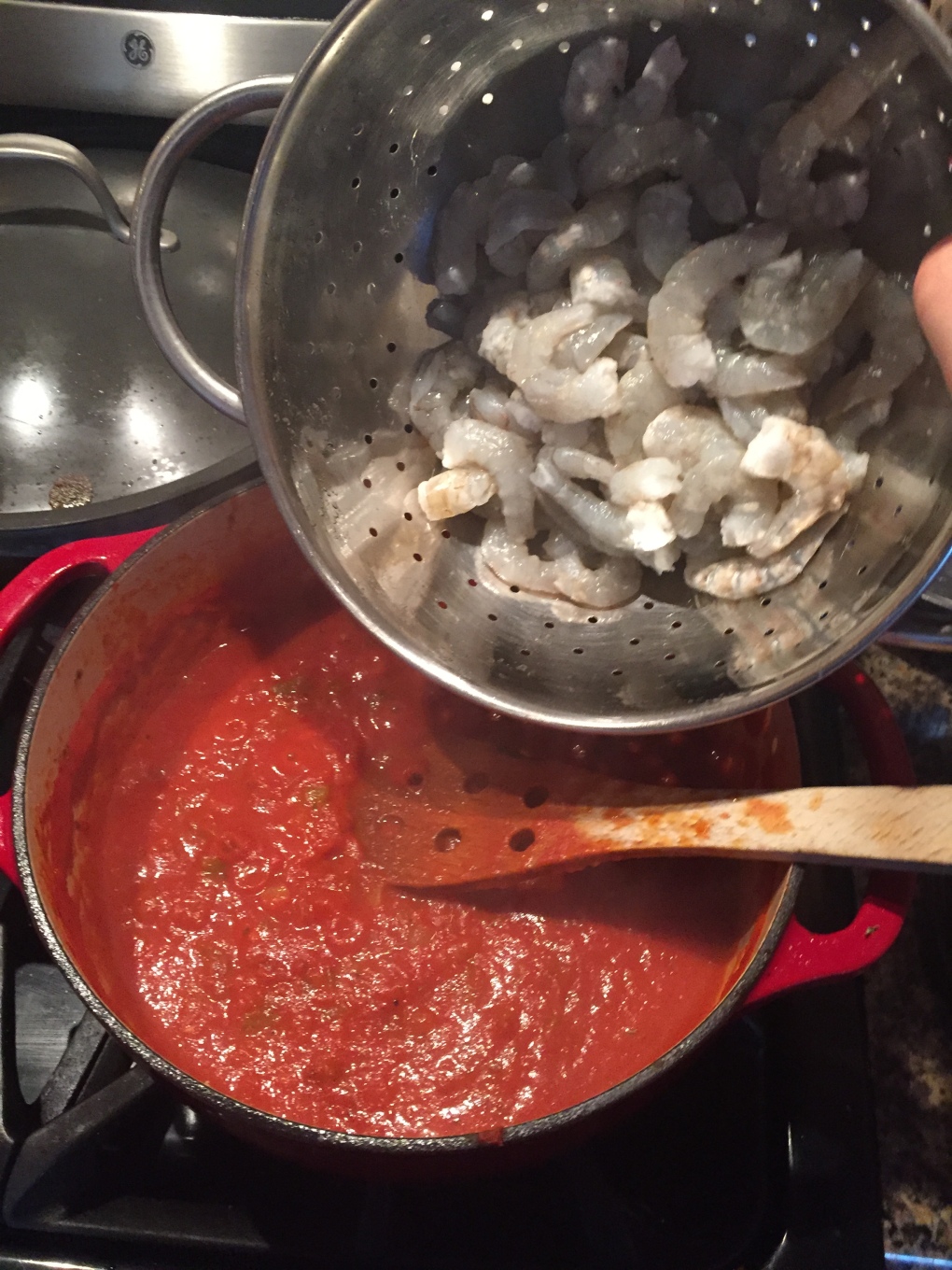
  9. When ready to serve, add the SHRIMP, stir, cover, and turn off the heat. The shrimp should be done in about 5 minutes – do not leave longer than 7-8 minutes.
  10. Serve over rice (or your favorite grain or starch – like cauliflower rice, shown below)

OK, let’s look at what’s involved in some of the steps.  Some of these may be basic for you, but hopefully there are some useful tips here!

Dicing onions:

  • Cut off the top then cut the onion lengthwise in half from the base to the cut top end.
  • Peel the onion.
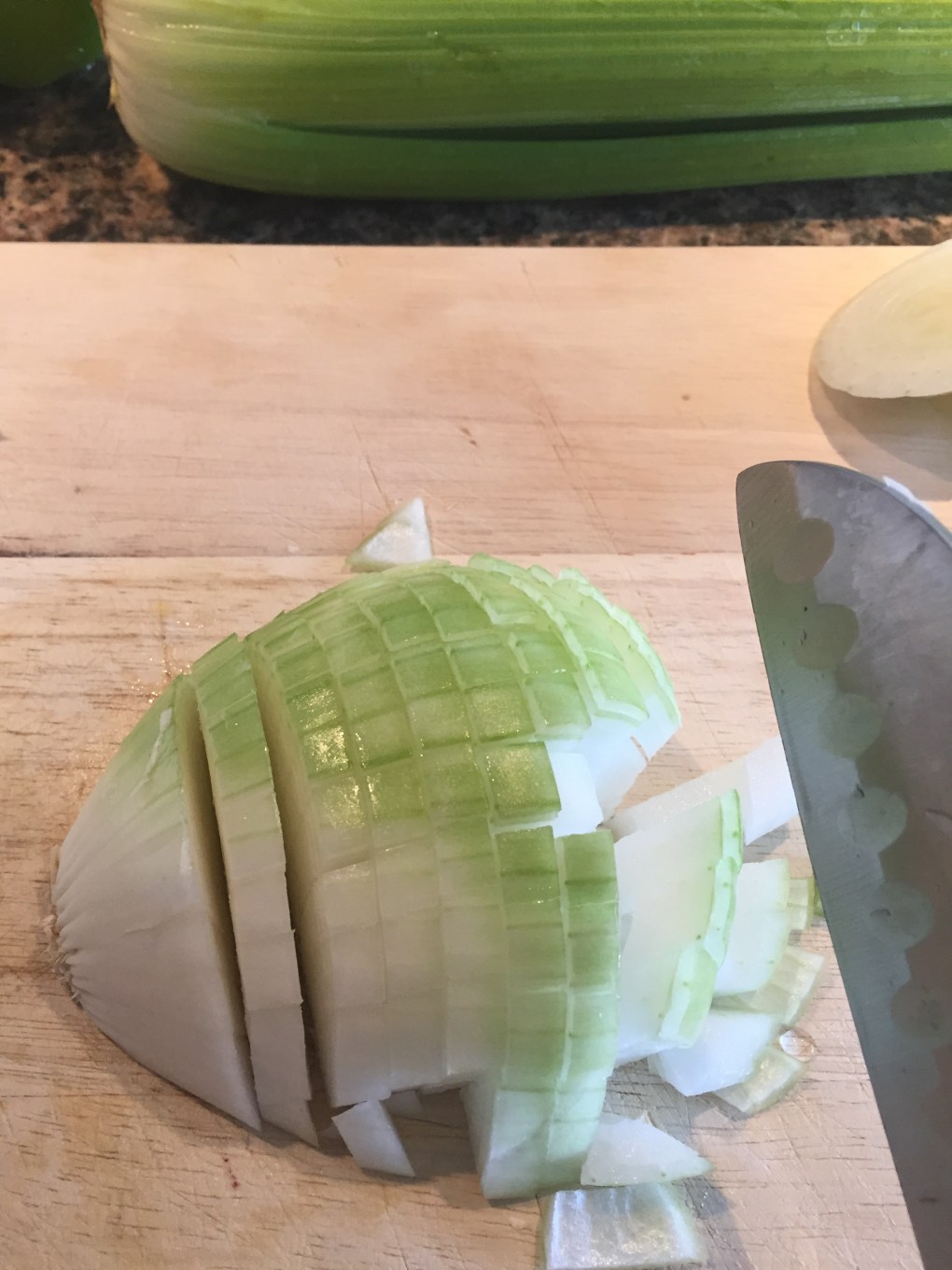
  • Score each half of the onion lengthwise by cutting through about ¾ inches short of the base (see photo). If you’re careful not to cut too far, you can reduce the number of tears this process can produce.
  • Cut across the onion crosswise so you get a fine dice. Voila!

IMG_2373

IMG_2376


Mincing garlic:

You can always use a garlic press – I like that for thing like salad dressings or other times where the garlic won’t get cooked down.  But for a nice stress release, try smashing the clove (skin on) with the side of your chef’s knife like so.

The peel is easy to remove and mincing from here is a breeze.

Deveining shrimp:

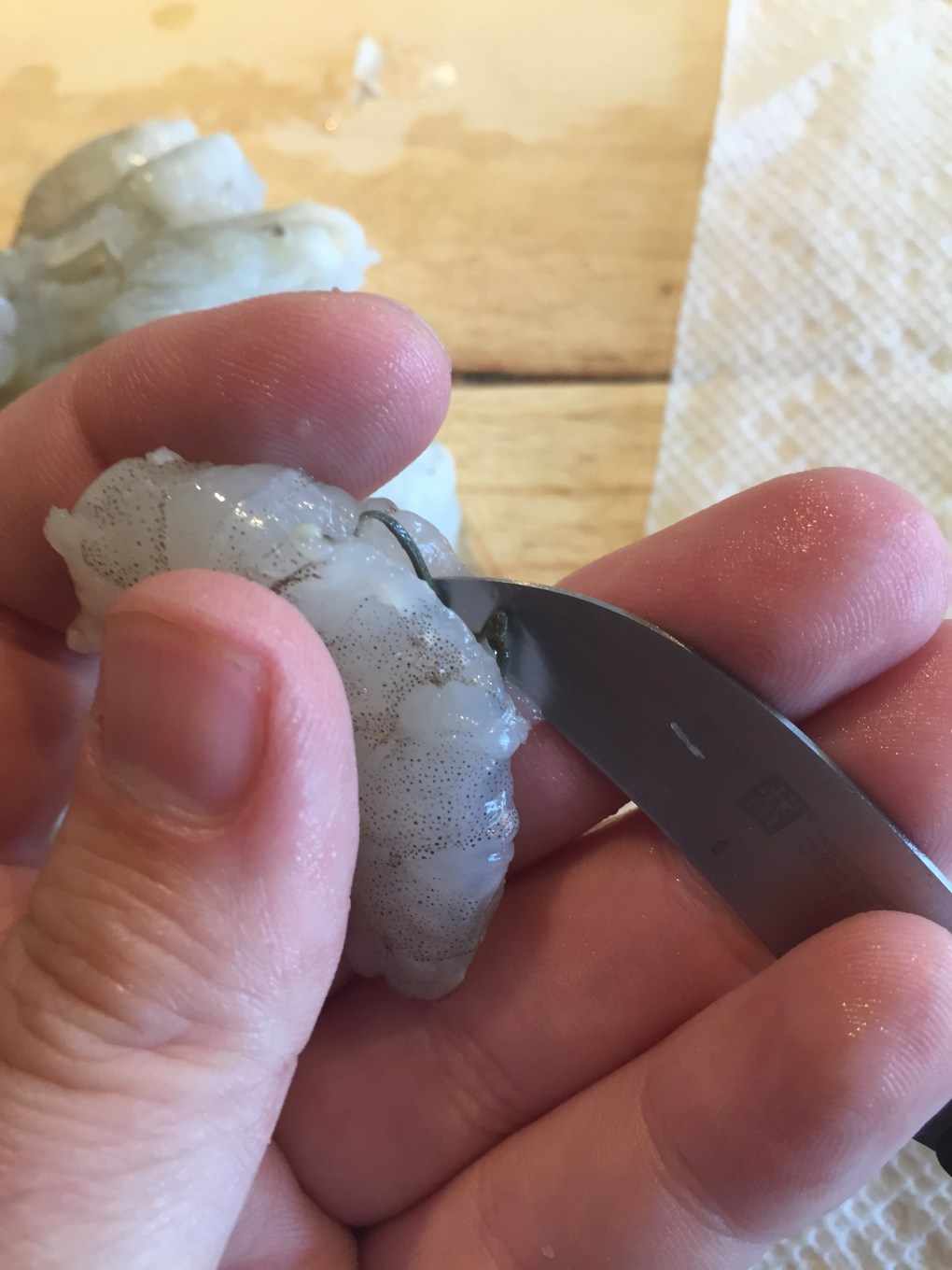
It’s a pain, but once you get the hang of it and into a groove, you can fly through this.  Best is to have a short knife, preferable one with a hooked end.  And have a couple paper towels handy for disposing of the “veins.”

IMG_2392

Step 2 – How do you know if the onions are done?  They look like this or even browner (but NOT black):

IMG_2423

Step 3 – How do you know if the onion, celery and green pepper (the “Holy Trinity” of Cajun/Creole cuisine) are soft?  They look like this:

IMG_2432

Step 9 looks like this – your sauce should look like this or even more concentrated:

IMG_2436

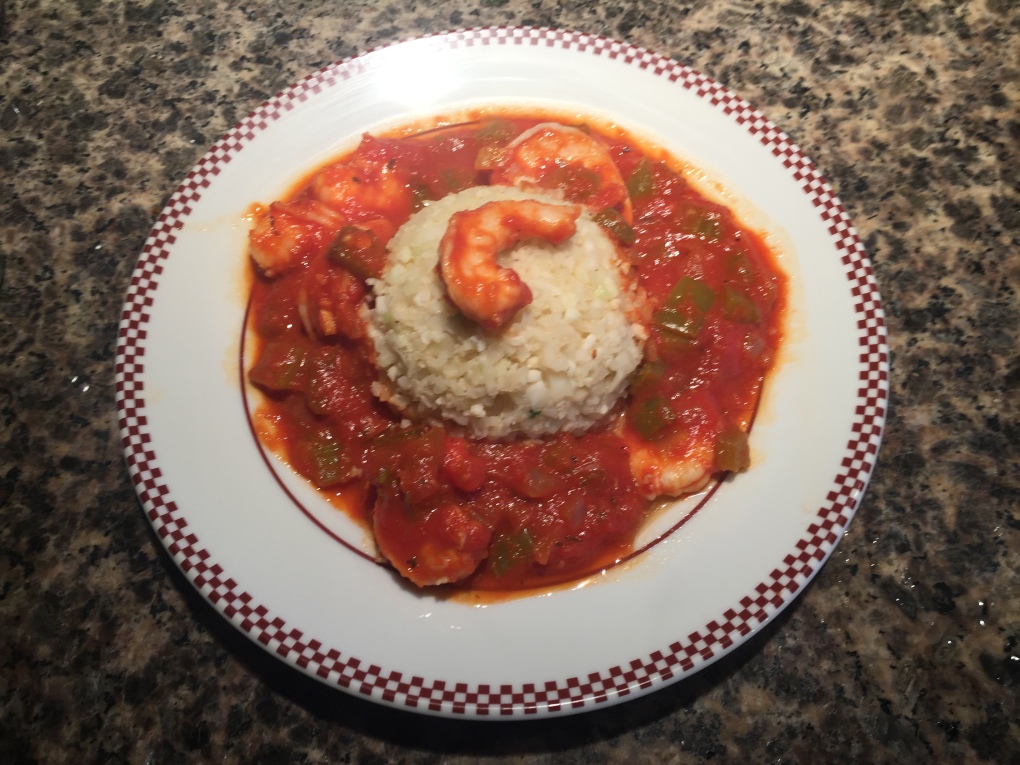
And here is the final plating over a scoop of cauliflower rice (rice is better tasting, frankly, but we’re doing the low carb thing):

IMG_2440

Serve with a dry white wine or rosé.  Also awesome with beer, especially if you made it super spicy.

A few other notes:

  • Shrimp cook fast, and overcooked, rubbery shrimp are just sad. Feel free to check on the shrimp after 5 minutes to be sure they are just cooked through but not tough.  This makes such a difference with this dish.  Consequently, it doesn’t heat up well once you’ve cooked the shrimp.
  • Feel free to cook the stock longer – the longer, the better the flavor. Chef Paul’s recipe calls for adding the shrimp heads as well.  This makes the stock much stronger in flavor and an intense orange color.  Quite impressive.
  • Do devein your shrimp (or get pre-deveined). The shrimp will taste bitter if the “vein” is in there.  Don’t make me explain what the “vein” actually is.
  • Browning the onions well is a key step to developing flavor.
  • Feel free to add more butter – it just makes it richer, which is not a bad thing.
  • Crushed tomatoes are the best for tomato sauces like this. I like them better than diced because they cook faster and have tomato sauce along for the ride.  Try different brands to find one you like best.  Muir Glen is a good one but can be pricy.

Good luck!  Please let me know if this recipe works for you.

Up next – kung pao chicken!


Boulevard – Restaurant Review

Hello friends!

What we hope to do with this blog is share dining experiences and then see if we can learn from the best in the business how to bring that deliciousness home – at a fraction of the price.  We’ll learn not just from great restaurants but also from prominent cookbooks.  We will attribute greatness wherever we find it, but also help YOU experience some of this amazingness at home.  And sometimes we will find fault – particularly in our own failures to mimic the professionals.  And we’ll throw in some wine experiences to boot because why not?

We thought we would kick off this blog by taking in and taking on one of San Francisco’s most famous and well-regarded restaurants: Boulevard.  Located just off the Embarcadero in San Francisco’s financial district, Boulevard has been a go-to California/American establishment for business lunches and special occasion dinners.  This was a special occasion for us too – my darling Wifey’s birthday.  We were not the only couple celebrating a birthday that evening, and the restaurant went the extra mile by writing and signing a birthday card before we had even ordered.  That and the complimentary and traditional candle with our dessert.  Classy.

Boulevard was established over 20 years ago by Nancy Oakes and many other talented professionals.  They of course have a cookbook.  Some websites list the restaurant as being a seafood restaurant, and despite many seafood dishes on the menu, that’s not really the focus here.  The focus is excellent ingredients, seamless service and exquisite desserts. I had lunch here many years ago and was excited to come for dinner.

The restaurant is beyond lovely – warm, and inviting with colorful finishings including intricate fish mosaic tiles and faux fossils embedded in wood paneling – look at the tiffany glass and fixtures.

HNIB7283.JPG

And here are the menus:

Yeah, I don’t know half these ingredients either.  But the mystery will be revealed!  Here is what we ordered:

  • Ahi Tuna Tartare, Emerald Shiso Apples, Cucumber & Myoga Ginger Melon & Citrus Pearls, Matcha Aioli, Fresh Hon Wasabi, Sesame Nori Rice Crisps
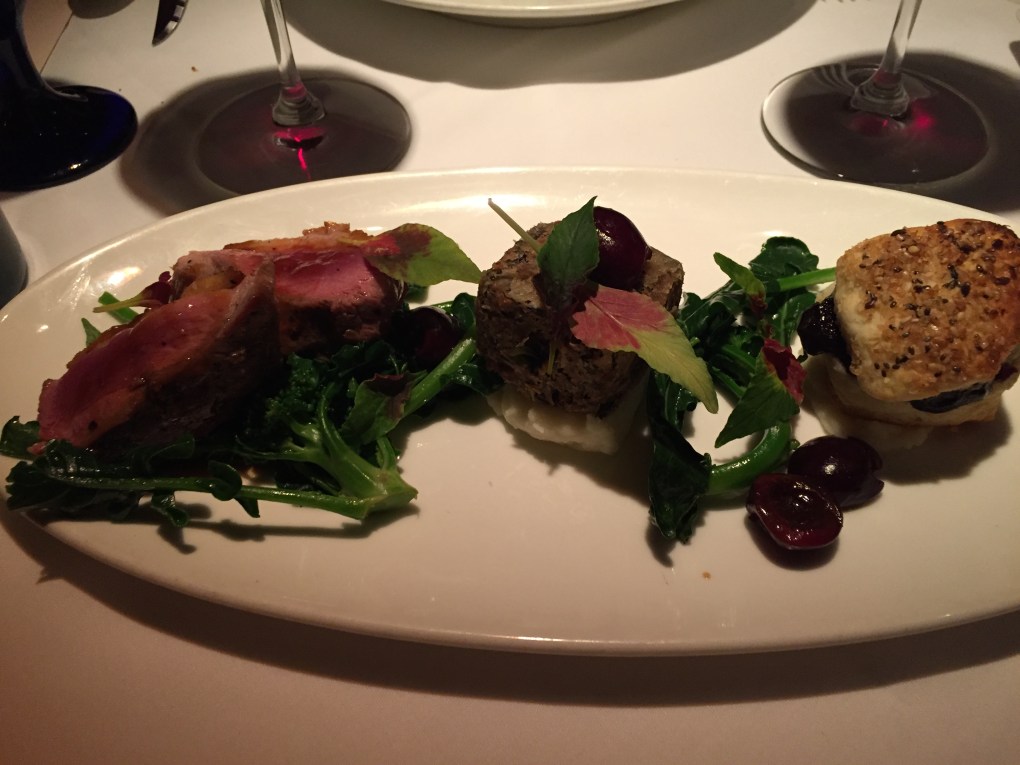
  • Liberty Farm Duck Breast, Wood Oven Roasted, Porcini & Wild Rice Confit Duck Leg ‘Hash’, Broccolini & Grilled Fig Leaf Mashed Potato Sour Cherry & Lime Preserve, Cream Biscuit Bing Cherries in Duck Jus
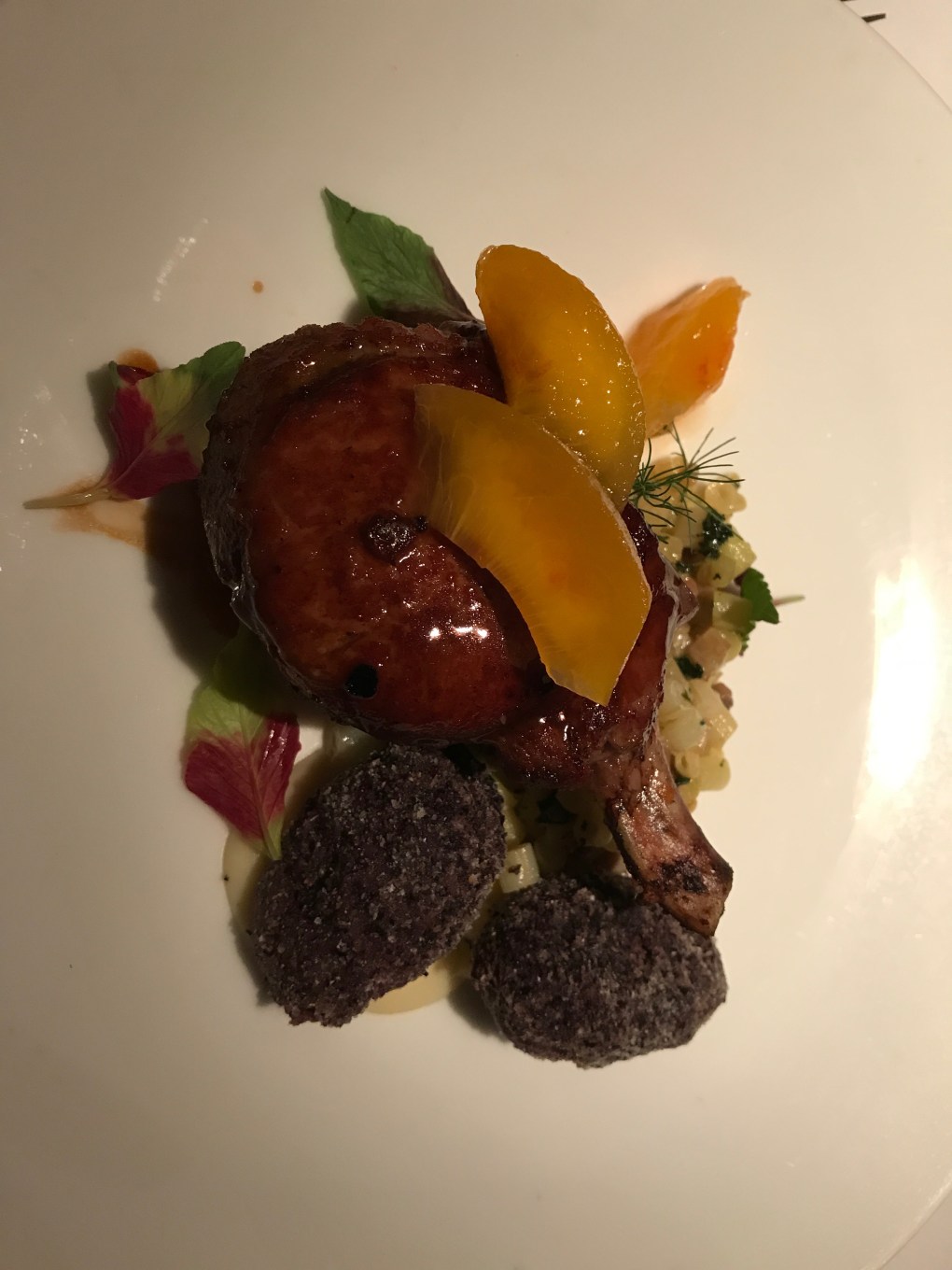
  • Kurobuta Pork Chop, Wood Oven Roasted, Blue Corn Gnoccho Fritters, Peaches in Elderflower Cordial Yellow Wax Beans, Spring Onion & Cap Bacon Pork Jus with Sage

Boulevard is known for stellar tuna tartare.  But how on earth does one make really good tuna tartare?  Isn’t just chopped tuna with a bunch of garnishes and something crisp to use to try to scoop up the tuna and get it to your face?

So here is what arrived:

OXOI0840 - Copy (2)

Look at all that lovely fish hiding under those crisps.  And did they add a couple shrimp chips to the nori crisps?  Yes, yes they did.  You’ll see also that the tuna is gently formed into a flat cylinder, not crammed in there.  That’s a nice touch.

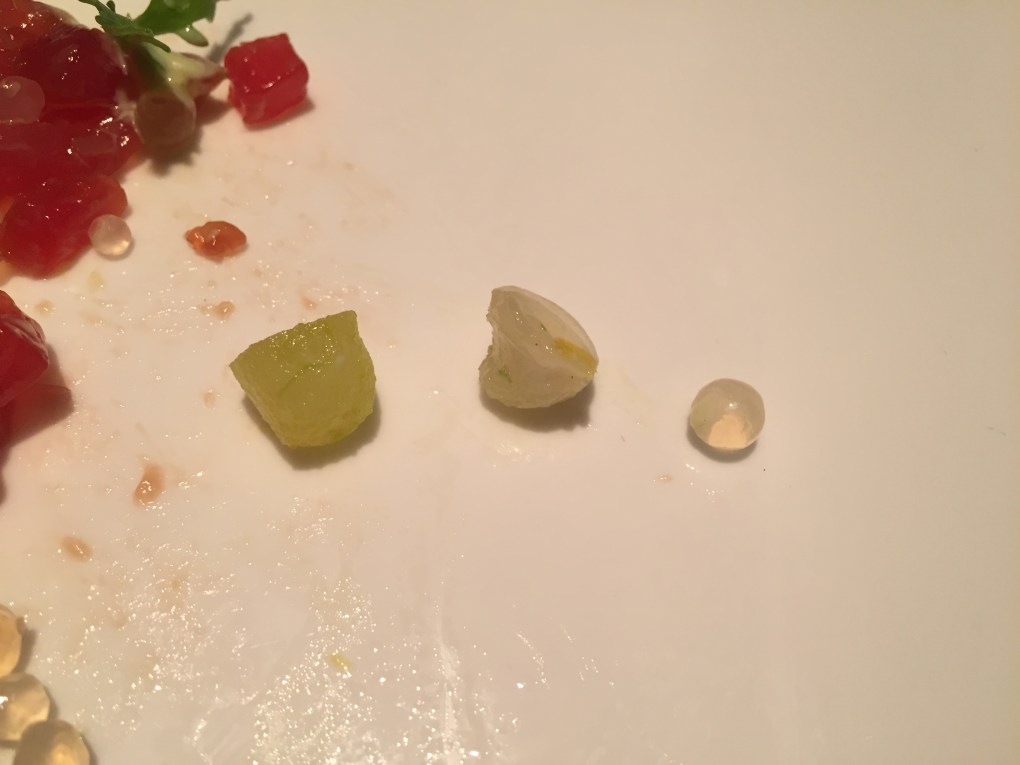
But wait, what else is going on here?  Some funny bits have been added.  We pulled them out to get a better look:

IMG_2323

Have you ever ordered something and totally forgotten what the other ingredients were? Yeah, we do that all the time.  Thankfully, we were able to figure out that these tidbits were, from left to right, (1) apple, (2) cucumber, and (3) the melon and citrus pearl.  So, what do these add?  Two things – acid and texture.  The apple was tart and crisp, the cucumber, crisp, and the pearl, tart and soft.

What on earth is a pearl?  Molecular gastronomy!  Basically, they took melon and citrus juice, added a gelling agent, and made lots of lots of little balls.

So how did this taste?  Sublime.  The tartness and textural changes contrasted with the soft richness of the tuna in delightful ways.  The crisps were pretty good – although frankly I preferred the shrimp chip, which offered a little saltiness as well as its own textural fun: the way it starts crisp and just melts in your mouth.  Seriously, tuna tartare demands a shrimp chip.  The other components here – the matcha aioli, the ginger, and the silly microgreens – didn’t offer much in flavor or anything else.

On to the entrees: Let’s look at the duck breast:

IMG_2326

Now that is how a duck breast is supposed to look. If you haven’t had duck before, don’t be afraid of duck.  It’s like chicken grew up and decided to be serious food.  Almost like rare beef in bird form.  Frankly, I ate around the fatty layer – I’m Jack Sprat in this respect.  What else do we have here?  In the middle is a bizarre little hash made with duck fat and to the right is, yes, it is a little scone.  Yeah, they call it a biscuit –a biscuit with cherry jam.  It was delicious… but made no sense on the plate whatsoever.  The duck and sour cherry combo is a classic – here was their effort to deconstruct it.  But here is the thing with deconstruction – you make it harder for me to enjoy the meal because I have to try to figure out how to combine bites.  And while chicken and waffles may be a popular combo, the same cannot be said for duck and scones.

Let’s look at the pork chop:

OPVK3683 - Copy - Copy

We have to be honest here – any pork chop we eat will pale in comparison to the best pork chop on the planet – which is served only one place: Lolinda.  We will do that review at a later date.  Nonetheless, this was an excellent pork chop – tender and chewy, nicely trimmed of fat, and pleasantly salted.  I could have done with more salt, but whatevs – that ticks off Tom Colicchio, not me.

What else is on this plate?  Those big grey lumps are the gnocchi fritters. Made with blue corn meal.  This is a misstep, I think.  It was crisp on the outside but pure mush on the inside.  Gnocchi are supposed to be pillowy yet with a pleasant bite.  This was neither.

The true revelation here: the yellow wax beans, diced to almost look like corn kernels.  They popped with flavors of bacon and onion.

And finally, desserts!!  Wifey and I are doing the low carb thing, but for fancy dinners we throw that out.  We got these guys:

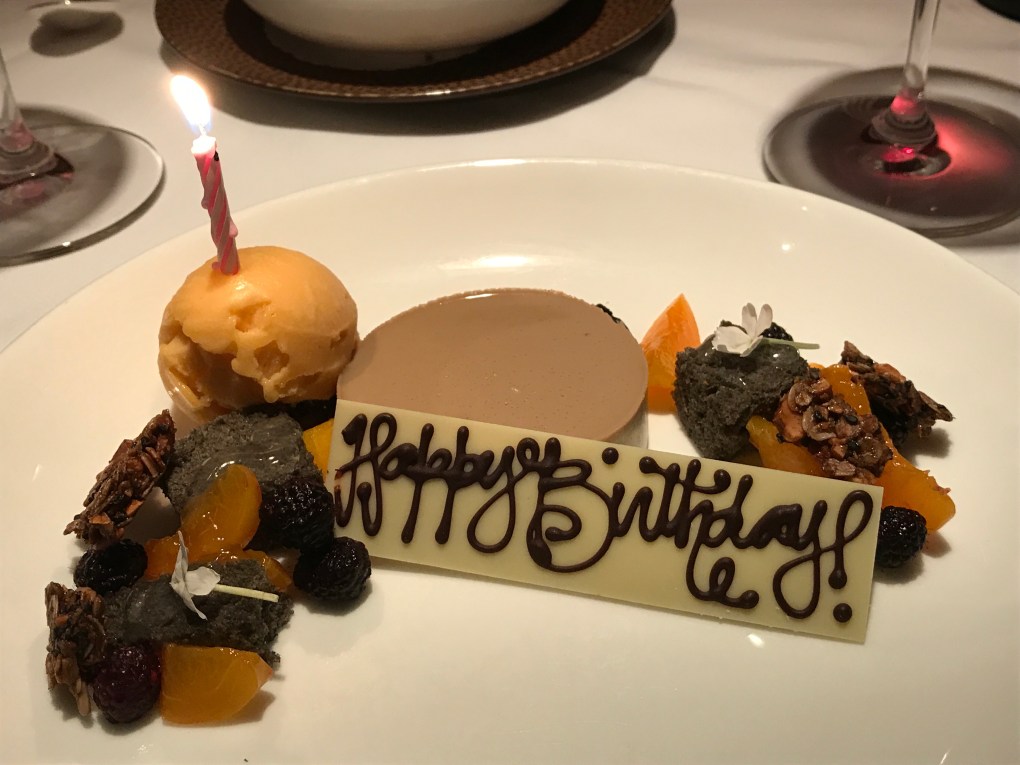
  • Lover’s Lane Honey Sunflower Panna Cotta, Black Raspberries, Blenheim Apricots and Sorbet, Sauternes Gel, Almond Sesame Granola and Angel Food Cake
  • Butterscotch Pudding, Caramel Rice Krispies, Almond Pine Nut Florentine, Dark Chocolate Marshmallows, Salted Caramel Sauce

UNQS9312 - Copy (2)

IMG_2335

We both love panna cotta and pudding.  But there is good and bad.  For us, the best panna cotta we’ve ever had is at Oenotri in Napa.  We’ll review that soon.  Boulevard’s was good, but frankly a bit too hard-set for us – too much gelatin perhaps.  The revelation on the plate was the apricot sorbet – so soft, so pleasantly tart.  The grey stuff is angel food cake.  Why is it grey?  Haven’t the foggiest idea.  Weird.

The butterscotch pudding was remarkable – silky rich pudding with a gentle butterscotch flavor, and the crispy, salty nut Florentines were a perfect accompaniment.  See here they balance the rich pudding with salty crispiness, where the panna cotta was offset with tartness but a bit of a confusing array of textures.

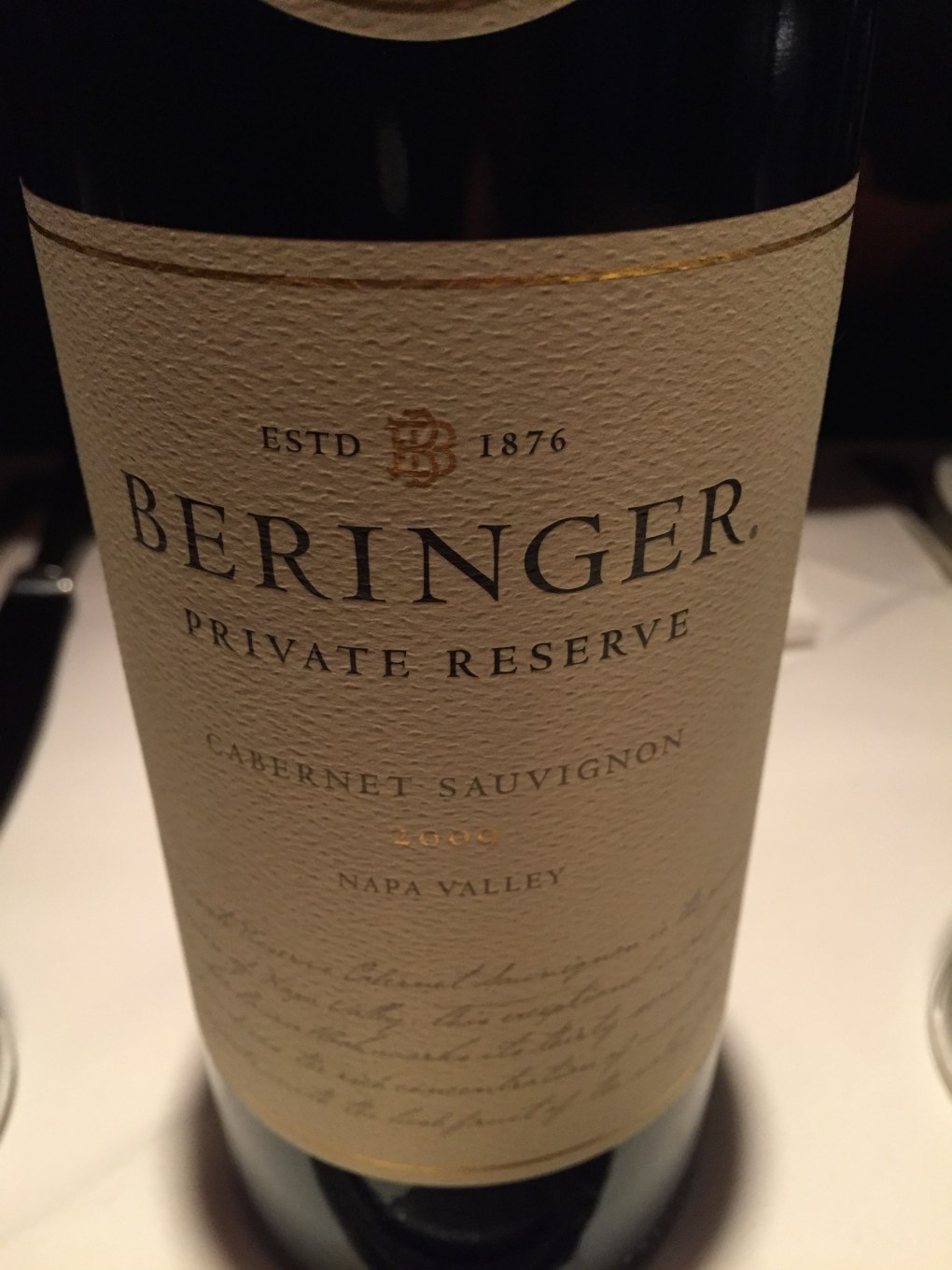
What did we drink?  Wine, of course.  We brought this beauty from our cellar:

IMG_2317

It was aged perfectly.  Many Napa cabernets drink tough when young – when most people taste them when visiting wine country.  This was how a cabernet is supposed to taste – softer but still slightly chewy tannins and velvety fruit.  Boulevard’s corkage was $30 which, for a restaurant of this caliber, is very reasonable. We’ll post about corkage and wine at restaurants at a later date.

Conclusion: While we did find faults with Boulevard, they did the big stuff exceptionally well.  Meats were cooked and seasoned perfectly and were prime cuts.  Dishes were plated in a lovely fashion and showed an effort to experiment, which is admirable in an established restaurant.  Service was smooth and impeccable – there when you needed them, but not over you all the time.  For us, it’s well worth the money, particularly if you bring your own wine.  Happy Eating!